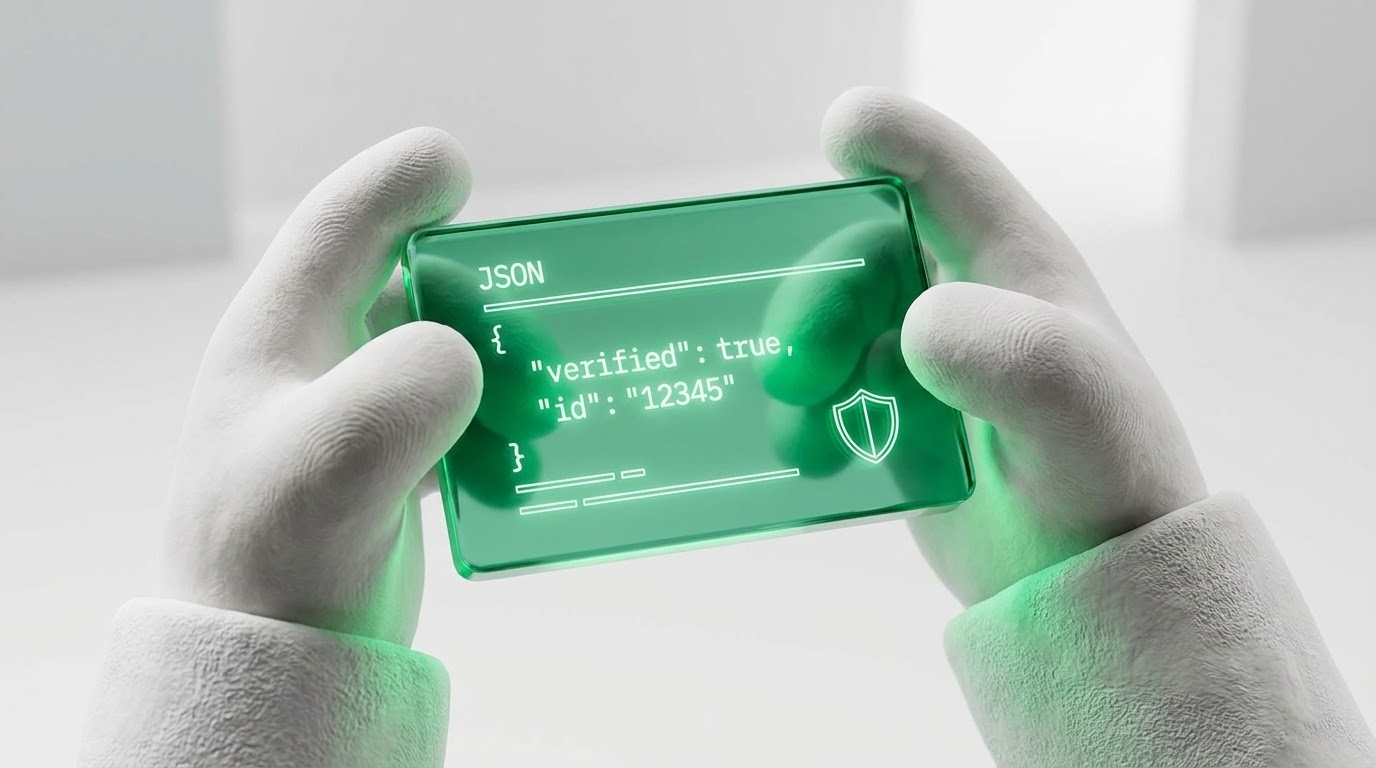
We don't sell evaluations. We sign evidence.
The AI governance market has a structural problem: the people grading models usually have a stake in the grade — a remediation product to sell, or risk of their own on the book. We built the other thing. A measurement layer that produces signed, deterministic facts and takes no money from anything it ranks.
Measurement, not certification. Board unreachable from this browser — read it yourself at /api/gspc
Almost everyone grading AI has a stake in the grade
It is not an accusation about any particular firm, it is a description of how the market is built. If you diagnose the problem and also sell the fix, your incentive runs one way. If you carry the risk and also set the score, it runs another. Neither arrangement is fraudulent and both are fine businesses — they just cannot produce neutral evidence, because neutrality is a structural property, not an intention.
- PainThe party diagnosing your gaps is often the party selling the remediation
- PainScores from a party that also carries the exposure are not independent inputs
- You getA grader with no product attached to any outcome
- Only hereStructurally independent: we take no money from anything we rank, ever

Measure, sign, re-measure. Three verbs, no fourth.
We evaluate against a frozen corpus of 417 statutory provisions using deterministic predicates at temperature zero — no model judging a model. We sign the result with Ed25519 over a SHA-256 hash chain, verifiable offline against the key published at did:web:csoai.org. And when the law or the system changes, we measure again and publish a delta card beside the original. Nothing expires; nothing is revoked; nothing is silently edited.
- Pain"Valid until" dates that track a calendar rather than the statute
- You getDeterministic grading — same rows, same grader, same number
- You getA delta card when the law moves, with the original preserved
- Only hereAppend-only by construction: corrections are published, never overwritten

Fourteen slots, and the honest status on every one
Thirteen canonical axes are measured on the full fleet with a separation test. The fourteenth is jail — whether a model can be talked past its guardrails — measured on a smaller fleet across 71 gold items, with its separation still untested and labelled that way. Where a leader is not statistically separated we print a tie. Where a response cannot be parsed by a rule we report it unmeasured rather than scoring it wrong.
- PainGrids filled in by converting ambiguity into failure
- You getSample size, interval and status visible on every slot
- You getTies reported as ties; unmeasured cells left visibly empty
- Only hereThe awkward slot is on the board, not omitted from it
The same signed format, wherever behaviour has to be evidenced
Generative content marking. Autonomous systems and robotics. Critical infrastructure. Supply chain. Energy. Telecommunications. Health and life-sciences data. Advanced compute. These are not markets we claim — they are places where somebody will shortly have to prove how a system behaved, to somebody who was not there. That is one problem in eight costumes, and it wants one evidence format.
- PainEach sector inventing its own unverifiable assurance dialect
- You getOne signed, machine-readable format that travels across sectors
- You getThe same card reads for a human, an agent and an answer engine
- Only hereOpen standards throughout — nobody needs our permission to read it
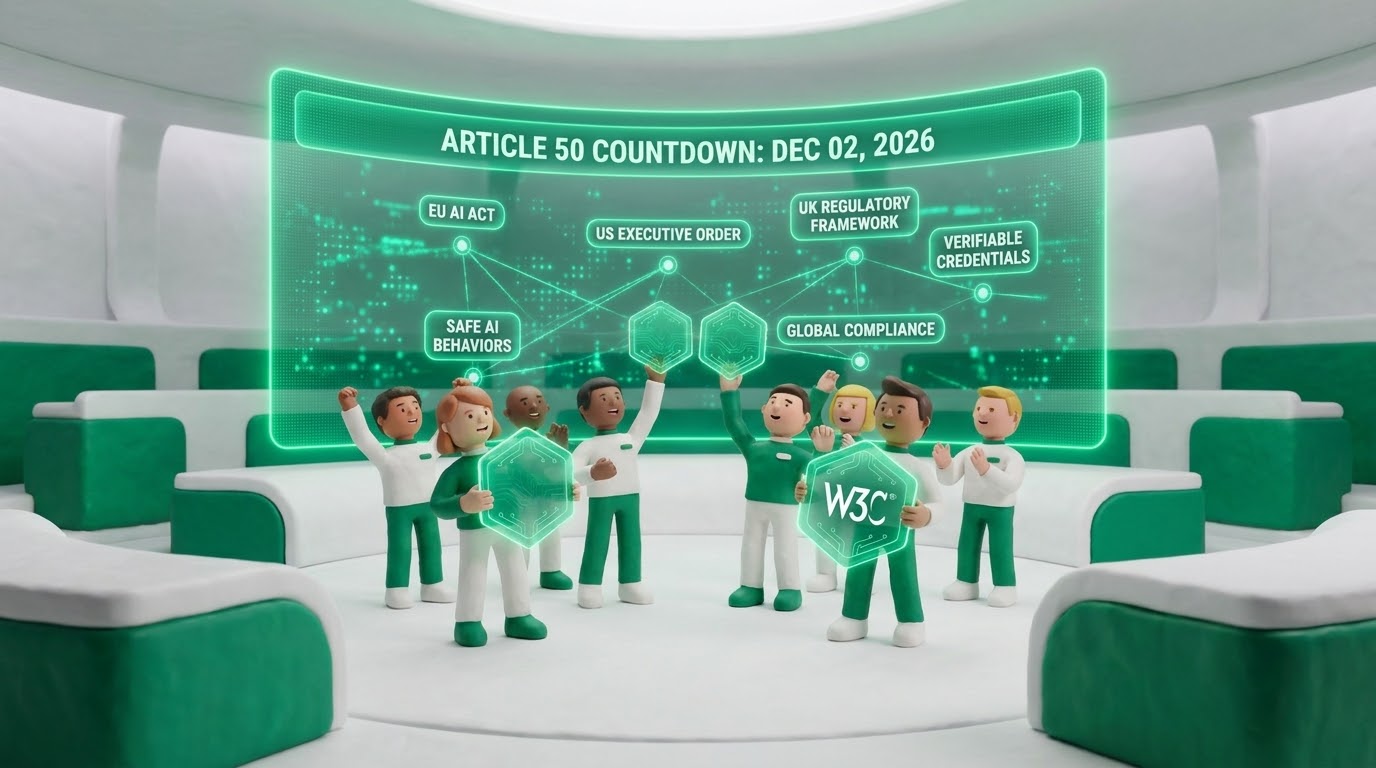
Obligations arrive on dates, not on readiness
The EU AI Act's transparency duties — including machine-readable marking of generated content under Article 50 — apply from 2 August 2026, and its serious-incident reporting under Article 73 sits in the same wave. Providers will need evidence formats a regulator can actually read. Every EU member state has to stand up a regulatory sandbox, and those sandboxes need measurement rails underneath them.
- PainDeadlines that arrive whether or not your evidence tooling does
- PainIncident reports assembled by hand, in whatever format seemed reasonable
- You getSigned, dated evidence bound to the specific provision in question
- Only hereOur corpus-watch tracks the statutory text daily, so drift is a published event

The rail is free. The relying party pays.
Developers never pay and never can — verification is free forever, with no account, no rate limit and no relationship required. The money comes from the parties who need the truth to be neutral: insurers, auditors, procurement. It is the Let's Encrypt shape applied to governance. Free at the point of verification is not generosity; it is the only structure in which the evidence is worth anything.
- PainPaywalled assurance, where the public can never check the claim
- You getAnyone can verify any card, free, forever, without an account
- You getNo pricing on any ranked outcome — a grade is never for sale
- Only herePaid by the observer, never by the observed
The parts that exist, and the parts that are design
The board, the signed cards, the public verification endpoint, the corpus-watch and the refutation ledger are live and checkable right now — that is what the links on this page go to. Other pieces described in our architecture are design, and we label them as design wherever they appear. The distinction is the point: a rail that overstates what it carries is not a rail.
- You getEvery claim on this page resolves to a live endpoint or a published record
- You getDesign figures are labelled as design, including our own council structure
- Only hereWhere we retracted a claim, the retraction is published beside it
What this page does not claim
We publish the limits with the results. Everything below is something a reader could reasonably assume from a page like this one — and each is something we cannot presently evidence, so we say so rather than let the assumption stand.
- We do not claim anything we issue expires or auto-downgrades. There is no expiry state and no revocation. When the law moves we re-measure and publish a delta card; the original stays on the record.
- We do not claim any independent time-stamping. No RFC-3161, no OpenTimestamps, no blockchain anchor — the anchor is Ed25519 over a SHA-256 hash chain against did:web:csoai.org.
- We do not claim post-quantum signing. Ed25519 today; the ML-DSA-65 (FIPS-204) signer is built but not shipped, and the label changes only when it ships.
- We do not publish market sizes, premium projections or growth rates for AI assurance or AI insurance. Those numbers are not ours to evidence.
- We do not characterise named competitors' conflicts of interest. The structural argument on this page is about market shapes, not about any particular firm.
- We do not certify, accredit or approve anything, in any sector named here.
Coverage on this page is never typed by hand. Board unreachable from this browser — read it yourself at /api/gspc Corrections to anything we have published live in the refutation ledger — append-only, never a silent edit.